Table of Contents
- Overview
- School Entry as an Opportunity to Check Vaccination Status
- Leveraging Schools for Vaccination Delivery
- Key Takeaways
- Additional Resources and References
Overview
Immunization programs typically focus on reaching children during the first few years of life, when the majority of vaccine doses are administered. As additional vaccines are recommended for older children, such as human papillomavirus (HPV) vaccines to prevent cervical cancer, and as global immunization coverage continues to lag behind targets, alternative strategies are increasingly being utilized. These include school entry checks and school-based vaccination, both of which take advantage of the school setting to vaccinate older children as well as to catch-up those who may have been missed earlier in life. Particularly in settings where school enrollment is high, school-based vaccination allows immunization programs to efficiently identify children who are behind on routine immunizations removing some of the common logistical barriers to vaccination and increasing vaccine access. As countries plan their immunization programs in the face of recent changes to the global funding landscape, school-based strategies should be considered, particularly since Gavi 6.0 support can be used for routine delivery through school-based services and the establishment of programs to check vaccination status at school entry.
School Entry as an Opportunity to Check Vaccination Status
 School entry vaccination checks involve reviewing a student’s vaccination status, either at the time of enrollment or later, to identify children missing doses and provide referrals for catch-up vaccination. Vaccination checks differ from school entry mandates in that they can be used with or without entry requirements; that is, they can be used to implement policies requiring proof of vaccination for school or childcare entry, although they may also be conducted simply to identify missed doses and promote vaccination [1].
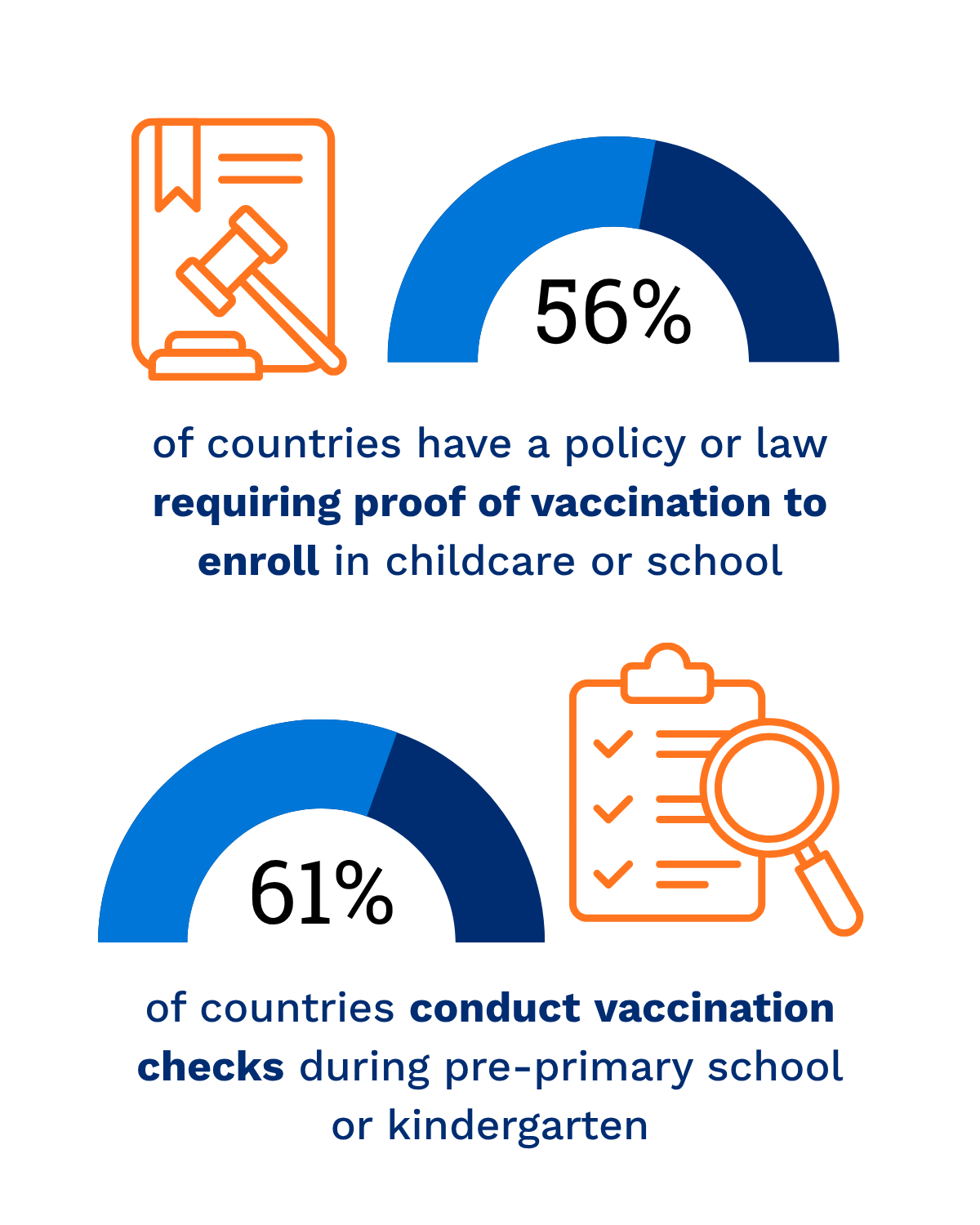
School vaccination checks have been implemented in countries for decades. In 2025, 95 of the 171 countries with data available (56%) reported a policy or law requiring proof of vaccination to enroll in childcare or school, while 97 of the 158 countries with data available (61%) conduct vaccination checks during pre-primary school or kindergarten. In the same year, 19 of the 55 Gavi-eligible countries with available data (35%) reported a policy or law requiring proof of vaccination for childcare or school enrollment, while 16 of the 47 Gavi-eligible countries with data available (34%) conduct vaccination checks during pre-primary school or kindergarten, indicating a disparity in use of vaccination checks between Gavi-eligible and non-Gavi-eligible countries. The decision to conduct vaccination checks is sometimes made at the subnational level, in which case these policies may not be reflected in this data. In the United States, for example, school vaccination policies are left up to states, and mandates can vary widely.
School entry vaccination checks require sufficient school and health system capacity, as well as collaboration between relevant governmental sectors such as the Ministries of Health and Education is essential. Well-defined policies and procedures must be established, such as those outlining the collection of vaccination history, vaccination catch-up, and vaccine record reporting and keeping. The availability of vaccine records is particularly important for the success of these programs, including up-to-date home-based records or an electronic vaccination registry. Vaccination checks should be conducted each year, and as such, funding and staff to carry out the activities are required on an annual basis [1].
Despite the logistical complexities of creating and sustaining school entry vaccination checks, these programs have many benefits. Vaccination checks provide an opportunity to identify children previously missed by the routine immunization, including vulnerable populations who may have previously been more difficult to reach, such as migrant children.
School entry checks can also facilitate the integration of vaccination into other settings and activities and subsequently improve coverage. As such, the Measles and Rubella Strategy Framework includes vaccination checks as a strategy to increase coverage of the second routine dose of the measles-containing vaccine (MCV2). In Zambia, a pilot intervention was conducted in 10 public and community primary schools to assess the feasibility and effectiveness of school-based vaccination screening and catch-up vaccination [2]. Researchers found that of the nearly 2,000 children screened, 38% were under-vaccinated, with MCV2 coverage at just 65.6%. Among the under-vaccinated children, 68.7% received at least one catch-up dose, mostly through school-based activities, indicating that school-based vaccination screening substantially improved measles vaccine coverage to 83.5%.
A school vaccination check program in China also led to a substantial improvement in measles vaccine coverage [3]. From 2003 to 2018, a program in the Guizhou Province checked children’s vaccination records upon entry to kindergarten and primary school and offered the missed vaccines to students. As a result, MCV2 coverage increased from 53% to 98%, and the six-month catch-up rate of MCV2 increased from 80% to 99%. In 2019, China incorporated the school entry vaccination check program into national policy.
Leveraging Schools for Vaccination Delivery
As demonstrated in these real-world examples, after un- or under-vaccinated children are identified through school entry checks, missed doses can be provided to further leverage the benefits provided by school settings and remove existing barriers to vaccination, such as distance to a health clinic or competing priorities for caregivers. Although supplementary immunization activities (SIAs) may deliver vaccines within schools as part of a campaign, school-based vaccination focuses on administering one or more routine vaccines in the school setting. In many cases, this approach is likely less resource-intensive than an SIA, which may require transportation of campaign staff (particularly in more remote areas), hiring and training of extra staff, and complex cold chain processes. Further, SIAs may disrupt other routine services being delivered at health facilities, which is less of a concern for school-based vaccination activities.
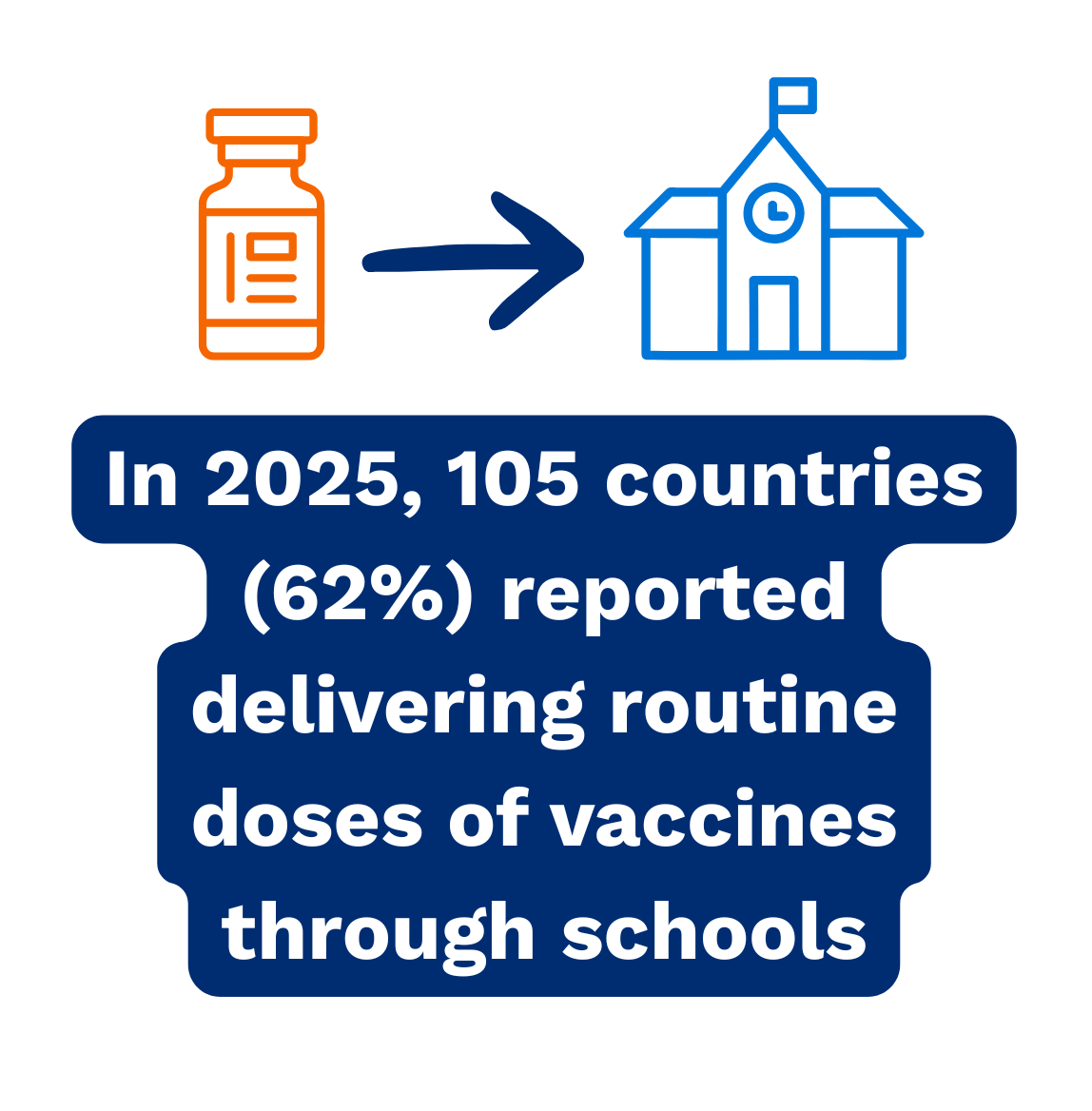
In 2025, 105 of the 170 countries with data available (62%) reported delivering routine doses of vaccines through schools. Of countries implementing school-based delivery, just under one-third (30%) are Gavi-eligible, while 34% are lower-middle-income, 29% are high-income, 26% are upper-middle-income, and 12% are low-income.
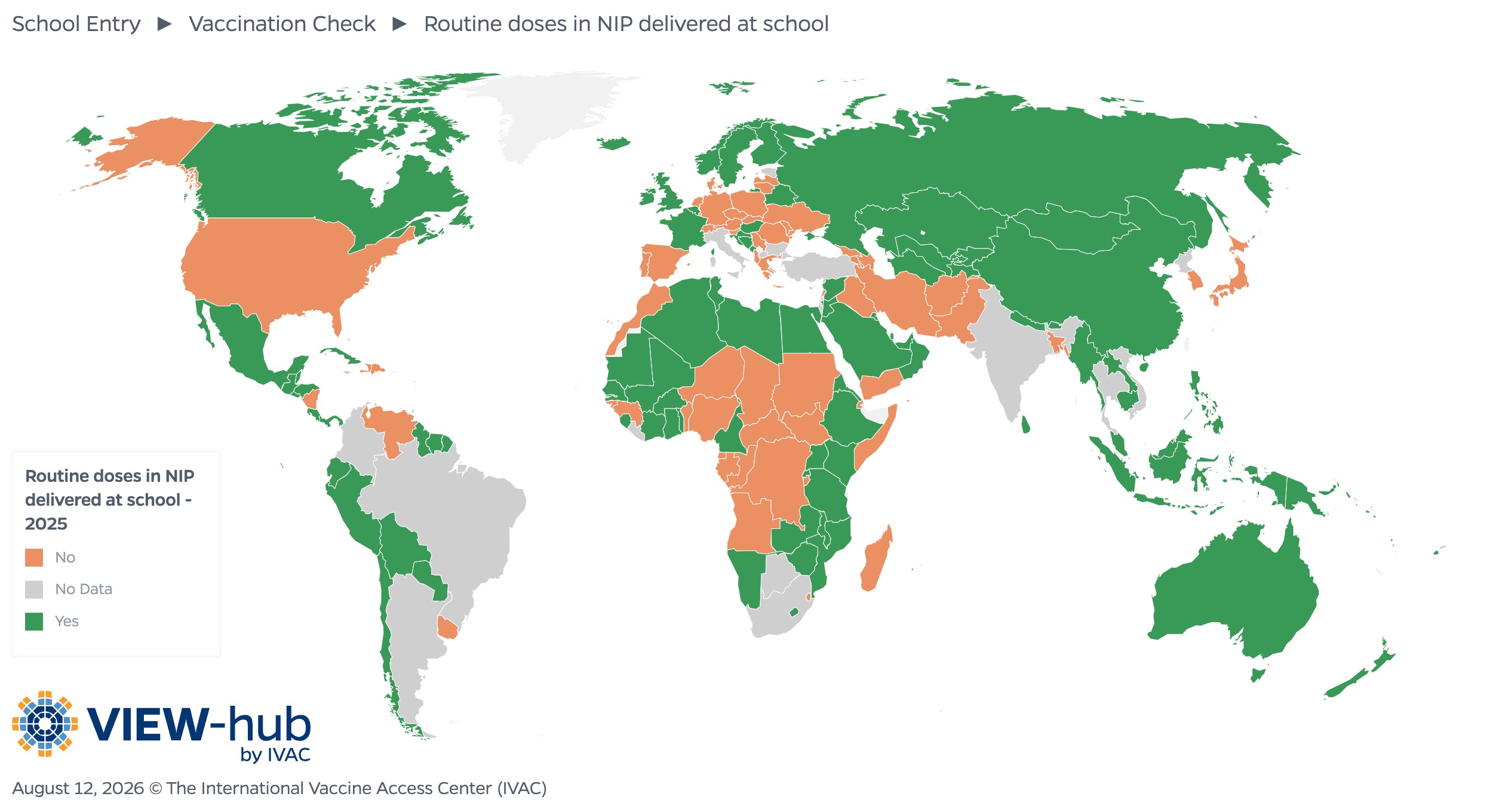
 Several other child and adolescent health services are already routinely delivered through schools, providing an opportunity to increase vaccination with the use of existing structures and resources. HPV vaccination programs, for example, often rely on school-based delivery to reach adolescents, integrating routine immunization services into existing programs to more effectively reach missed children while minimizing the need for additional resources [4]. In Tanzania, the HPV Plus program provided HPV vaccination along with deworming, nutritional assessments, and vision screenings for 10–14-year-old girls [5]. As this population is less likely to interact regularly with the health system as compared to younger children, school-based delivery allowed program implementers to more efficiently identify and then vaccinate those eligible for vaccination. Other antigens commonly delivered through school-based programs include tetanus and diphtheria [6].
Alongside the benefits of school-based vaccination, there are several context-specific barriers that countries must consider while planning to implement this approach. For example, unlike vaccination delivered through health facilities, parents and caregivers are typically not present during school-based vaccination. Countries must therefore establish clear, consistent processes for obtaining consent and must ensure that school staff are well trained on these steps. Another logistical consideration is how best to account for additional doses being given as part of school-based catch-up activities, such as by adjusting vaccine procurement estimates to account for these extra doses.
Further, school-based vaccination should be complemented with outreach activities to reach children who do not attend school. When HPV vaccination was first implemented in Rwanda, health care workers were mobilized to identify girls who were absent from school during vaccination efforts as well as those who were not enrolled, who were later vaccinated at a health facility [7]. Other HPV immunization programs have implemented mobile vaccination sites, community posts, and integration with community health days to provide opportunities for vaccination to those who do not regularly attend school [8]. School-based immunization programs can borrow from these experiences to avoid furthering existing inequities.
Key Takeaways
-
School entry checks and school-based vaccination can leverage benefits of the school setting to vaccinate older children and catch-up those who may have been missed earlier in life.
-
School entry checks rely on intergovernmental collaboration, sustainable resourcing, the availability of vaccination records, and well-defined policies and procedures.
-
Routine vaccines can be effectively delivered through school settings, as has been demonstrated by the successful implementation of school-based HPV vaccination, though additional efforts will be needed to establish consistent consent procedures and reach out-of-school children.
-
Countries that are not already implementing school entry vaccination checks or school-based vaccination programs should consider doing so to increase immunization coverage, particularly in a shifting funding landscape.
Additional Resources
Policy Brief: Implementing School Vaccination Checks & Catch-up
Global Consultation on Implementing Vaccination Checks at School
Toolkit for Implementing School Vaccination Checks & Catch-up
School Vaccination Checks Planning Tool
School Vaccination Readiness Assessment Tool
Considerations Regarding Consent in Vaccinating Children and Adolescents Between 6 and 17 Years Old
References
-
World Health Organization. School vaccination. World Health Organization. Accessed July 13, 2026. https://www.who.int/teams/immunization-vaccines-and-biologicals/essential-programme-on-immunization/integration/school-vaccination#my_anchor
-
Hasan AZ, Dombola AM, Prosperi C, Mufwambi W, Sakala R, et al. Assessing the effectiveness of school-based vaccination checks to identify and reach un- and under-vaccinated students in Zambia. Vaccine. 2026;79:128453. doi:10.1016/j.vaccine.2026.128453
-
Zuo S, Zhang D, Mu Q, Dai L, Du W, et al. Increasing vaccination coverage: the school entry vaccination record check program in Guizhou Province China, 2003-2018. Vaccine. 2020;38(36):7379-7383. doi:10.1016/j.vaccine.2020.08.055
-
Gallagher KE, Howard N, Kabakama S, et al. Lessons learnt from human papillomavirus (HPV) vaccination in 45 low- and middle-income countries. PLoS One. 2017;12(6):e0177773. doi:10.1371/journal.pone.0177773
-
Rosen JG, Guillaume D, Mlunde LB, Njiro BJ, Munishi C, et al. Feasibility and sustainability of a school-based platform for integrated delivery of HPV vaccination with adolescent health services in Tanzania: qualitative insights from stakeholders. Health Policy Plan. 2023;38(4):486–495. doi:10.1093/heapol/czad014
-
Feldstein LR, Fox G, Shefer A, Conklin LM, Ward K. School-based delivery of routinely recommended vaccines and opportunities to check vaccination status at school, a global summary, 2008-2017. Vaccine. 2020;38(3):680-689. doi:10.1016/j.vaccine.2019.10.054
-
Binagwaho A, Wagner CM, Gatera M, Karema C, Nutt CT, Ngabo F. Achieving high coverage in Rwanda's national human papillomavirus vaccination programme. Bull World Health Organ. 2012;90(8):623-628. doi:10.2471/BLT.11.097253
-
Rosser EN, Wysong MD, Rosen JG, Limaye RJ, Park S. HPV Vaccine Delivery Strategies to Reach Out-of-School Girls in Low- and Middle-Income Countries: A Narrative Review. Vaccines (Basel). 2025;13(5):433. doi:10.3390/vaccines13050433